Employment Contracts and Pay Slips
When you start a job, check your working conditions such as salary, working hours, and days off.
When you start a job, check your working conditions such as salary, working hours, and days off.
It's important to check not only a verbal explanation, but also documents such as a "Written Notice of Working Conditions" (rodo joken tsuchisho) or an employment contract.
Documents and timing to check
A difference between gross pay and take-home pay is not, by itself, treated as wrongdoing. Keep job listing information and the Written Notice of Working Conditions so you can check them later.
Before signing
- Written Notice of Working Conditions / employment contract
- Check salary, working hours, days off, job description, etc.
- Check any word you don't understand with the company before signing
After receiving your salary
- Pay slip
- Check the amount paid, deductions such as taxes and social insurance, and the take-home amount
- If it differs from what was promised, check with the company
Written Notice of Working Conditions
When concluding an employment contract, a company is required to clearly state to the worker the working conditions set by law, such as wages and working hours.
The main things to check are:
- Contract period
- Workplace
- Job description
- Working hours
- Breaks
- Days off
- Salary
- Matters related to resignation and dismissal
and similar.
If there is a word you don't understand, check with the company before signing.
If the conditions differ from the job advertisement
If the conditions you saw in the job advertisement differ from the working conditions actually shown to you, don't leave it as is — check.
Keep the job listing information and the Written Notice of Working Conditions so you can check them later.
Pay slips
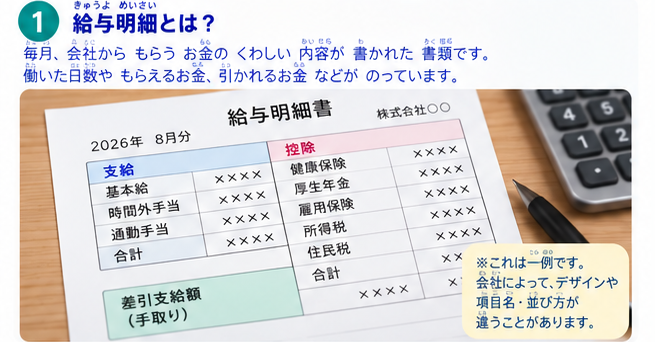
When you receive your salary, check your pay slip.
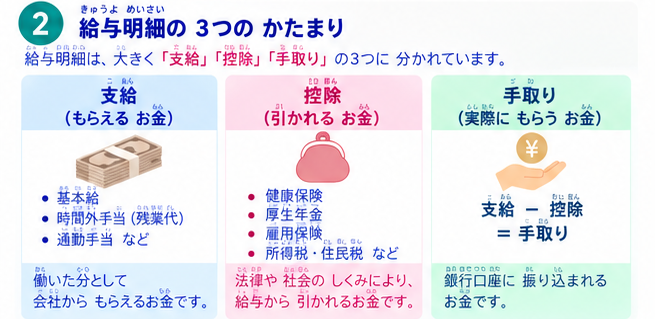
It mainly shows things such as:
- Base salary
- Overtime pay, etc.
- Commuting allowance, etc.
- Income tax
- Resident tax
- Health insurance premium
- Employees' pension insurance premium
- Employment insurance premium
- Take-home amount
"Gross pay" and "take-home pay"
The salary amount shown in your contract and the amount actually deposited into your bank account can differ.
This is because taxes and social insurance premiums, among other things, are deducted from your salary.
If something seems wrong
If you notice things such as:
- The salary is different from what was promised
- Overtime pay is not included
- Money is being deducted that you don't recognize
- Your salary isn't being paid
check with the company.
If it isn't resolved, you can consult a Labour Standards Inspection Office or a labor consultation counter.
What you can check next
- Wages, working hours, holidays, and paid leave
- Unpaid wages, dismissal, and harassment
- Taxes in Japan
- Health insurance in Japan
- Pension in Japan
Main places to check
- Ministry of Health, Labour and Welfare
- Prefectural Labour Bureau
- Labour Standards Inspection Office
Last checked: August 2026