Pension in Japan
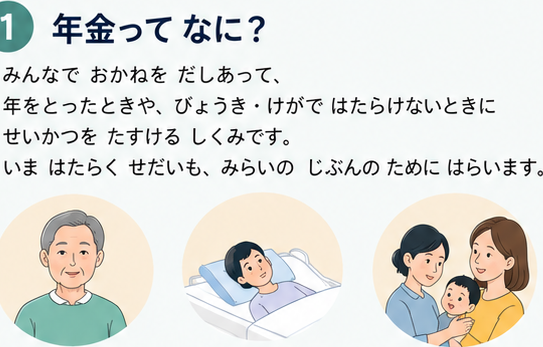
Japan's public pension system supports people's lives not only in old age, but also when a disability remains or when a family's wage earner passes away, among other situations.
Japan's public pension system supports people's lives not only in old age, but also when a disability remains or when a family's wage earner passes away, among other situations.
Foreign nationals who meet the conditions also join.
Check your pension category
The category changes depending on address, age, work status, and your spouse's situation.
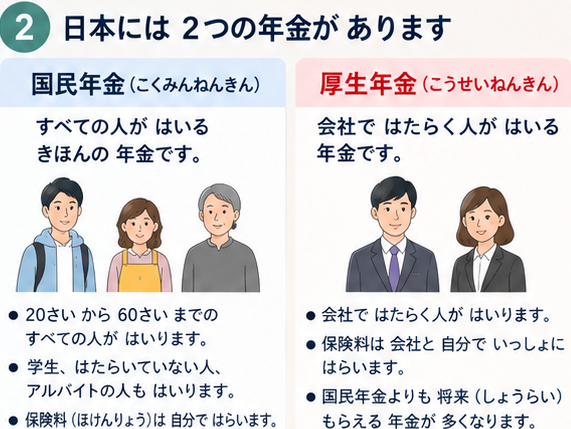
National Pension
- For people aged 20 or older and under 60 with an address in Japan
- People who do not fall under Employees' Pension Insurance, etc. may become Category 1 Insured Persons
Employees' Pension Insurance
- People who meet the conditions at a covered company
- Enrolled through the company
Who Joins?
People aged 20 or older and under 60 who have an address in Japan are subject to National Pension, regardless of nationality.
People who work at a company, among others, and meet the conditions for Employees' Pension Insurance join Employees' Pension Insurance.
The pension category changes depending on how you work and your spouse's situation.
People Working at a Company
People who meet the conditions at a company subject to Employees' Pension Insurance join Employees' Pension Insurance through the company.
The premium is shared between the company and the individual, and the individual's portion is usually withheld from their salary.
People Not Enrolled in a Company's Employees' Pension Insurance
People aged 20 or older and under 60 with an address in Japan who do not fall under Employees' Pension Insurance or the related pension category as a spouse become Category 1 Insured Persons (第1号被保険者) of National Pension.
This applies to self-employed people, students, people not working, and others.
When you become a Category 1 Insured Person, you must complete the procedure at your municipality (shikuchoson), among other places, within 14 days.
When You Leave a Job
If someone who was enrolled in Employees' Pension Insurance leaves a company and does not immediately join another company's Employees' Pension Insurance, a change to National Pension may be required.
People aged 20 or older and under 60 who become a Category 1 Insured Person must complete the procedure within 14 days of the day after their resignation date.
The procedure differs, for example, if you become a dependent of your spouse.
Check the pension procedures you need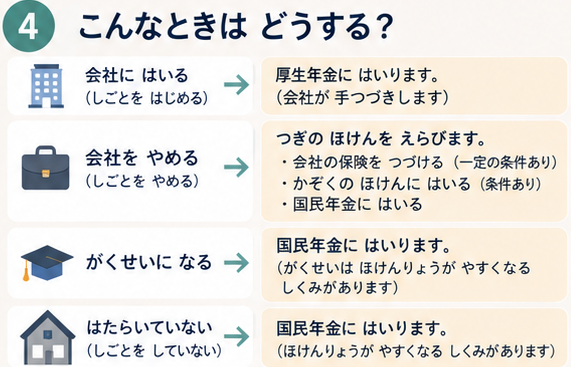
When It Is Difficult to Pay Premiums
If it is difficult to pay National Pension premiums due to low income, among other reasons, you may be able to use systems such as exemption or deferral of payment.
Do not leave it as is just because you cannot pay.
Consult your municipality or a Pension Office.
Students
For students who find it difficult to pay premiums, there is the "Student Payment Special Provision System" (学生納付特例制度).
Check with the Japan Pension Service or your municipality to see if you qualify.
When it is difficult to pay premiums
Check whether you can use these at your municipality or a Pension Office, among other places.
Exemption
- May be available in cases such as low income
Deferral of payment
- May be available
Student Payment Special Provision
- Students who find it difficult to pay should check if they qualify
When You Leave Japan
When you leave Japan and no longer have an address in Japan, your National Pension enrollment status changes.
If a foreign national has been enrolled in Japan's pension system for a certain period and then leaves Japan, they may be able to claim a "Lump-sum Withdrawal Payment" (脱退一時金).
However, receiving it affects your future pension amount and how your enrollment period is treated.
When returning to your home country, check the conditions and effects before making a claim.
Checking Your Pension Record
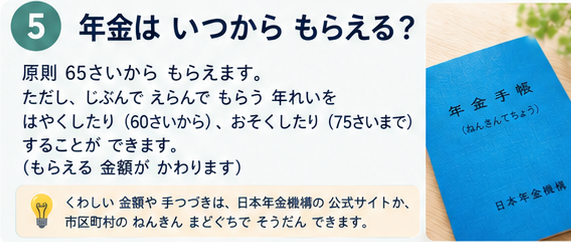
You can check your own pension record through services such as "Nenkin Net."
If something is unclear, such as a missing record even though you should have been enrolled, consult a Pension Office.
If You Are Not Sure
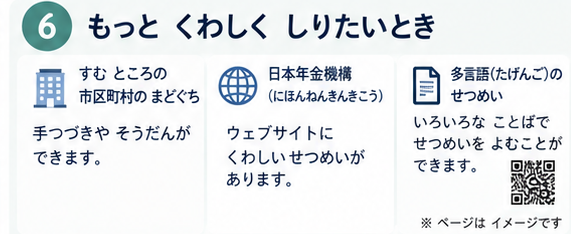
- National Pension → Municipality, Pension Office
- Employees' Pension Insurance → Your workplace, Pension Office
- Procedures after leaving a job → JANIA's check page
What You Can Check Next
- Leaving a job, changing jobs, or becoming unemployed
- Health insurance in Japan
- Leaving Japan and returning to your home country
- Not sure where to consult
Main Sources to Check
- Japan Pension Service
- Municipal government (shikuchoson)
Last checked: August 2026