Sick or Injured. Wanting to Go to the Hospital
When you are sick or injured, first check whether you need help right now.
When you are sick or injured, first check whether you need help right now.
Do you need help right now?
YES
119NO
Look for a hospital or clinic that matches your symptomsThe example symptoms are not a complete diagnostic standard.
Is It Dangerous Right Now?
In cases such as the following, consider calling 119 for an ambulance:
- No consciousness, or an abnormal response
- Difficulty breathing
- Strong pain in the chest
- Heavy bleeding
- Sudden slurred speech, or difficulty moving arms or legs
- Other symptoms or injuries you believe are life-threatening
When calling 119, tell them that you need an ambulance, your location, and your symptoms, among other information.
The difference between 110 and 119
110Police
For an incident, a crime, an accident, or anything else where you need the police right away
119Ambulance / fire
When you need an ambulance, or in case of fire
It is not simply "119 for anything life-threatening." For an incident or accident where you need the police, call 110. If you are not sure which to call, check each guide below.
See also
When It Is Not an Emergency
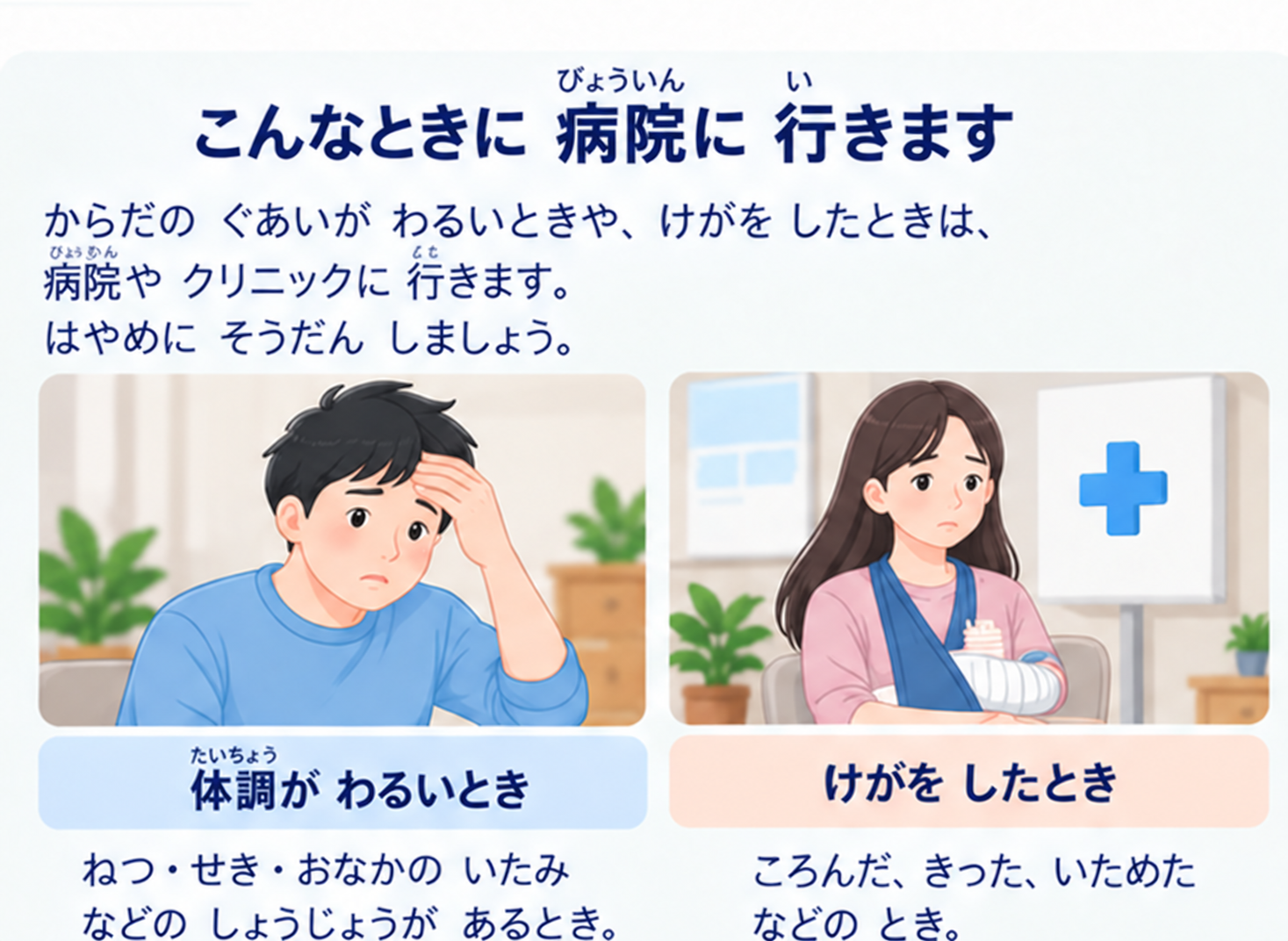
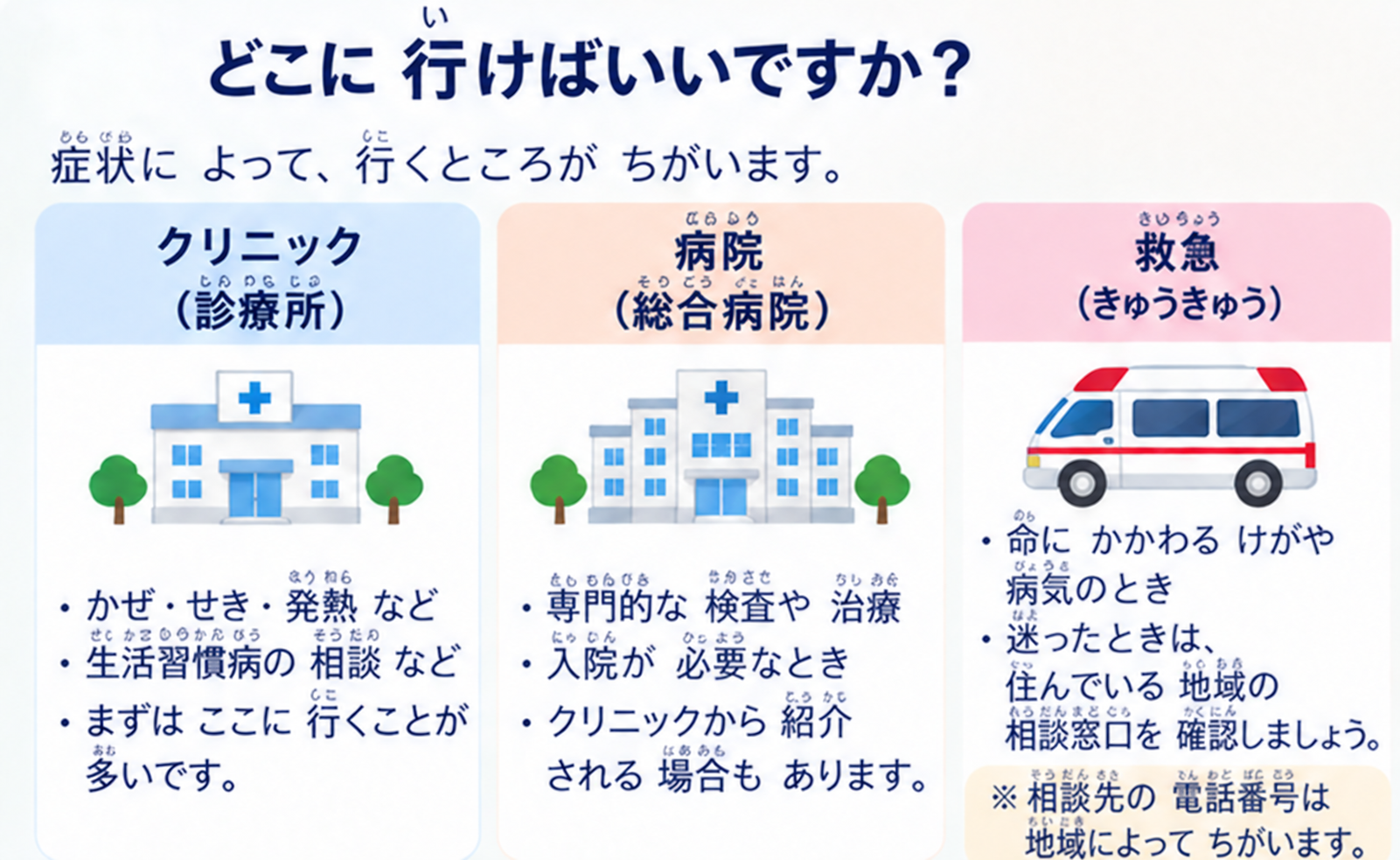
If you do not need an ambulance right away, look for a hospital or clinic that matches your symptoms.
Check the following:
- Whether the patient is an adult or a child
- What the symptoms are
- Whether it is an injury or an illness
- Whether the facility sees patients at the current time
- Whether you want to consult in a foreign language
When You Are Not Sure Which Department to Visit
Depending on your symptoms, the department you should see differs — for example, internal medicine, surgery, pediatrics, or obstetrics and gynecology.
If you are not sure, call the medical institution, describe your symptoms, and check whether you can be seen.
At night or on holidays, when you do not know where to go, you may be able to use a regional emergency consultation service or emergency medical information guide.
What to Bring to the Hospital
If you have them, please prepare the following:
- Your My Health Insurance Card or Certificate of Eligibility for Insurance Benefits
- Your Residence Card or something else usable for identity verification
- Your medication notebook (okusuri techo)
- Something showing what medication you are currently taking
- A referral letter (if you have one)
What is needed may differ depending on the medical institution.
The Flow at the Hospital
In general, the flow is:
- Register at reception
- Describe your symptoms
- Receive an examination
- Undergo tests, if needed
- Pay
- If medication is prescribed, receive it at a pharmacy, among other places
When You Want to Be Seen in a Foreign Language
Some medical institutions can respond in a foreign language.
Before making an appointment or being seen, check whether they can respond in your preferred language.
Medical interpretation services may be available in some regions or medical institutions.
When You Are Unsure
If you are unsure whether to call an ambulance or go to a hospital, refer to your region's emergency consultation counter or the Fire and Disaster Management Agency's emergency care guide, among other resources.
If you feel it is highly urgent, call 119.
What You Can Check Next
- Sudden illness, ambulances, and night/holiday care
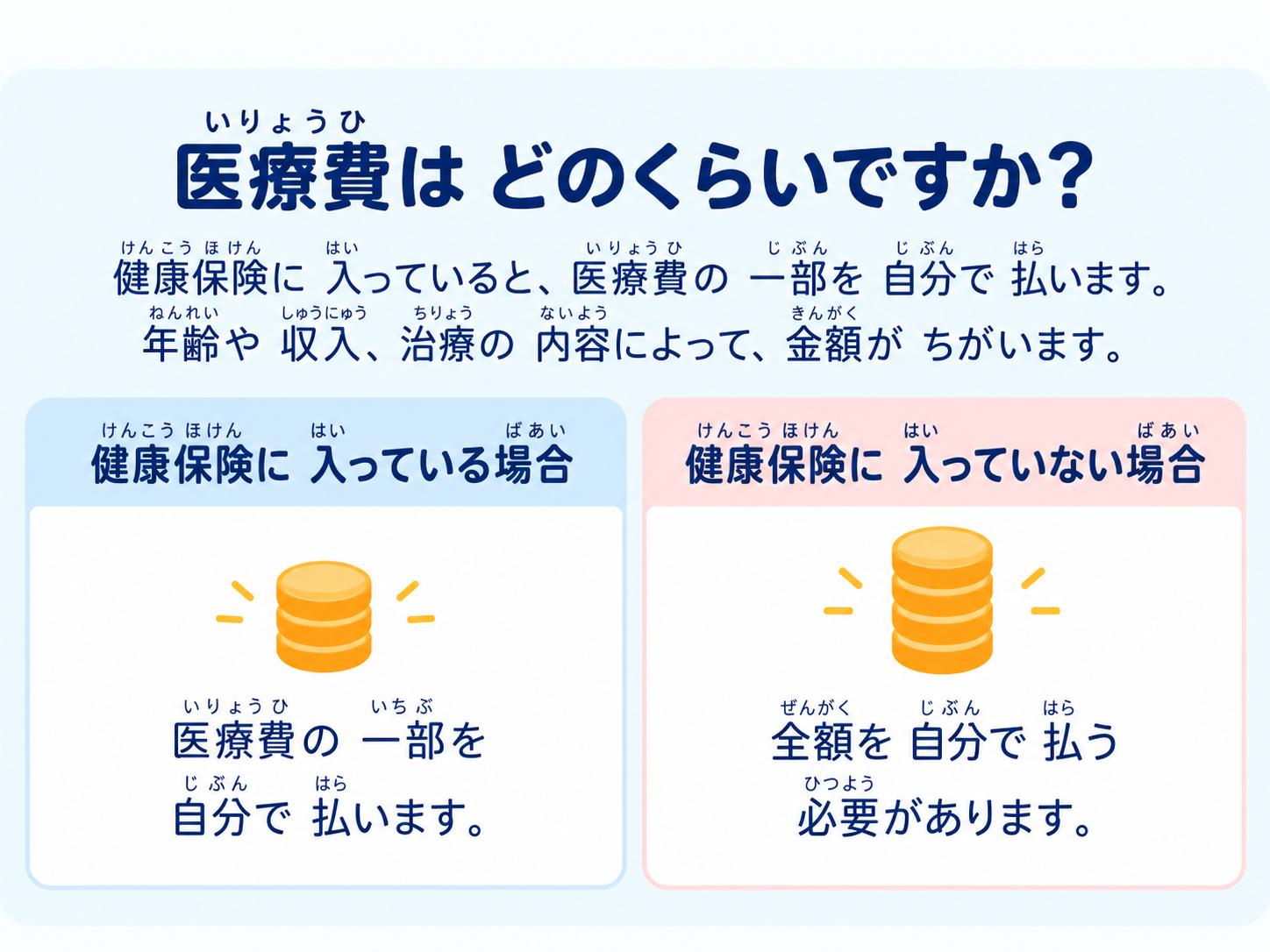
- Departments, reception, examinations, and medical costs
- Wanting to be seen in a foreign language
- Health insurance in Japan
- Medication, health checkups, and vaccinations
Main Sources to Check
- Fire and Disaster Management Agency
- Ministry of Health, Labour and Welfare
- Regional emergency medical information guides
Last checked: August 2026