An Earthquake Has Happened
When an earthquake happens, first protect your own life.
When an earthquake happens, first protect your own life.
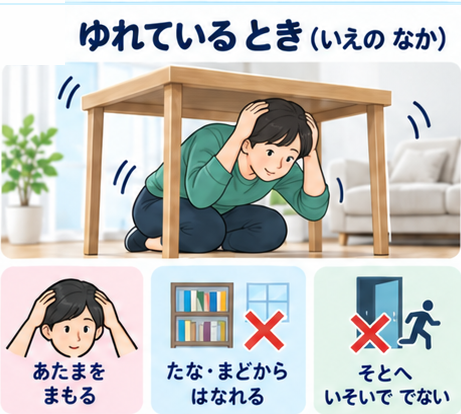
While It Is Shaking
- Protect yourself under a sturdy desk or table, etc.
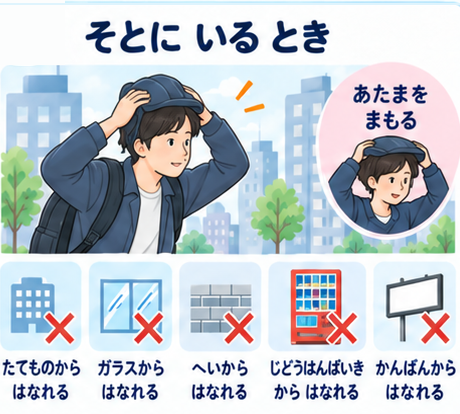
- Protect your head
- Do not panic and rush outside
- Even if you are using fire, do not force yourself to go put it out
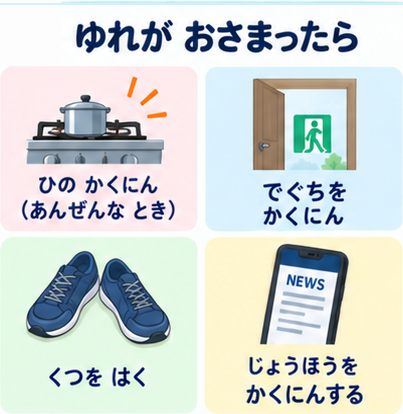
- Once the shaking stops, check the exit
Once the Shaking Stops
Check your surroundings.
- Whether a fire has started
- Whether the building has major damage
- Whether there are dangerous things such as broken glass
- Whether your family and people around you are safe
If You Are Near the Sea
When you feel strong shaking, or when a tsunami warning or evacuation notice is issued, evacuate to a safe place such as high ground.
In areas where a tsunami is a concern, do not go to look at the sea.
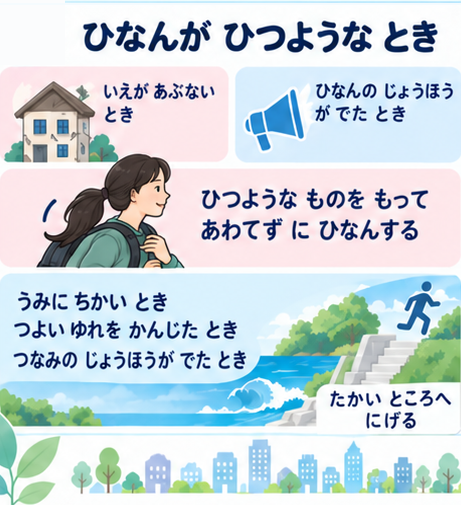
When It Is Dangerous to Stay in a Building
When it is dangerous to stay where you are — for example, if the building is at risk of collapsing, or a fire is nearby — evacuate to a safe place.
When evacuating, check guidance from your municipality, among other sources.
Going to an Evacuation Shelter
In cases such as when it is dangerous to stay at home, use your local evacuation shelter (避難所).
You can check the location of evacuation shelters through your municipality's disaster prevention information, among other sources.
The place you should evacuate to may differ depending on the type of disaster.
Check Correct Information
During a disaster, incorrect information can spread on social media, among other places.
Check official information from your municipality, the Japan Meteorological Agency, the fire department, and the police, among others.
Disaster information is also available in foreign languages.
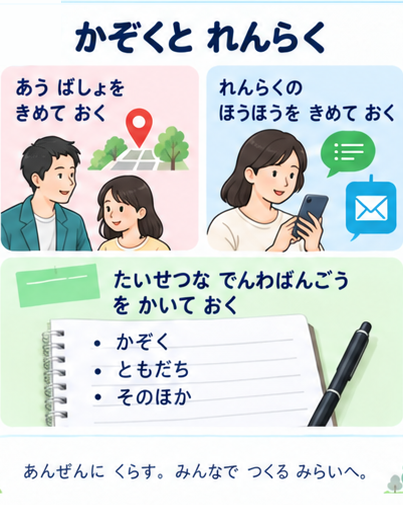
Checking Your Family's Safety
Phone calls may become difficult to connect.
Deciding in advance how to contact your family, such as through a disaster message service, will give you peace of mind.
What You Can Check Next
- The basics of disasters and disaster preparedness in Japan
- Tsunamis and evacuation shelters
- Viewing disaster information in foreign languages
- 119 – Fire and Emergency Phone Numbers
Main Sources to Check
- Fire and Disaster Management Agency
- Japan Meteorological Agency
- Municipal government (shikuchoson)
Last checked: August 2026