The Basics of Residence Status and the Residence Card
For foreign nationals living in Japan, "residence status" (在留資格) and the "Residence Card" (在留カード) are very important.
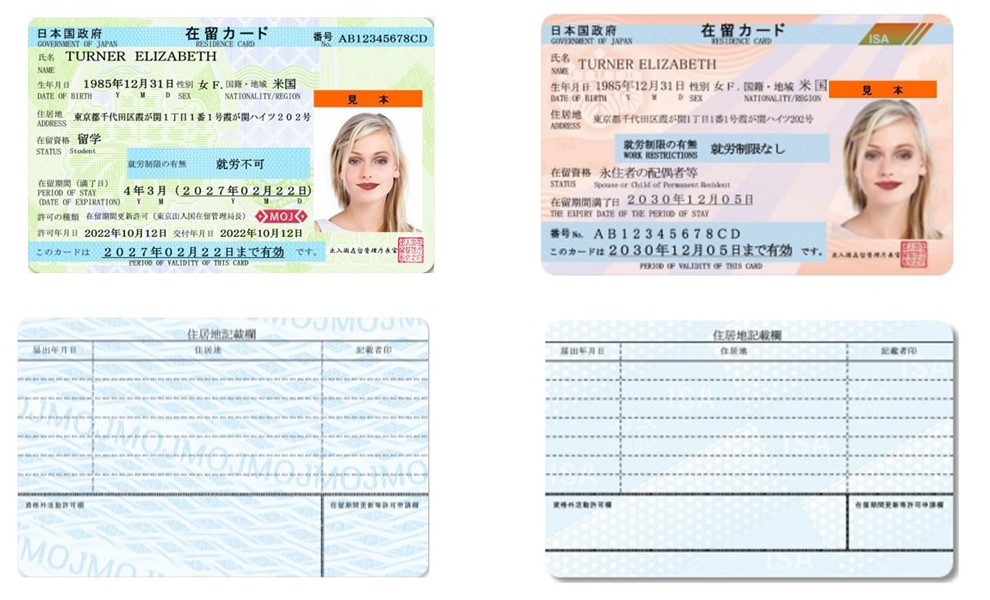
For foreign nationals living in Japan, "residence status" (在留資格) and the "Residence Card" (在留カード) are very important.
Your residence status determines what activities and work you can do in Japan. Your Residence Card records important information such as your residence status and period of stay.
Let's start by checking your own Residence Card.
Check your residence status, expiration date, and restriction on employment while looking at your Residence Card.
Residence Status
- Activities permitted in Japan
Period of Stay / Expiration Date
- Until when you can stay
Restriction on Employment
- Whether you may work, and what kind of work
Permission to Engage in Activity Other Than That Permitted
- Permission relevant to work outside your original activities
What Is Residence Status?
Residence status is the legal status that allows a foreign national to stay in Japan and carry out certain activities.
There are many types of residence status.
For example:
- Engineer/Specialist in Humanities/International Services
- Specified Skilled Worker
- Technical Intern Training
- Student
- Dependent
- Spouse or Child of a Japanese National
- Permanent Resident
and others.
What you can do in Japan differs depending on your residence status.
When working in particular, it is important to check whether the work is allowed under your own residence status.
What Is the Residence Card?
The Residence Card is a card issued to foreign nationals who stay in Japan for a mid- to long-term period.
It is an important document for confirming under what status you are staying in Japan.
From June 14, 2026, the format of the Residence Card changed, and a "specific residence card" (特定在留カード) that also has My Number Card functions has also begun.
Currently, some people hold the previous-format Residence Card, while others hold the new-format Residence Card or the specific residence card.
What Should You Check on Your Residence Card?
The following items are especially important to check.
Residence Status
Shows what activities you are permitted to carry out in Japan.
Period of Stay and Its Expiration Date
Check until when you can stay in Japan under your current residence status.
Restriction on Employment
Relates to whether you may work in Japan and what kind of work you may do.
Permission to Engage in Activity Other Than That Permitted
A permission relevant when doing work outside the activities originally allowed under your residence status.
Which card do you have?
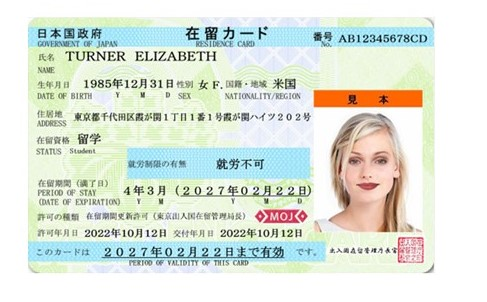 NameResidence statusWork rules (work restrictions)How long you can stay in JapanThe card's validity date
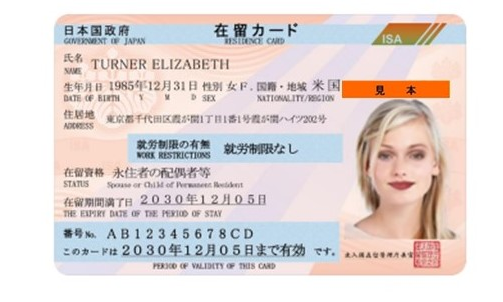 NameWork rules (work restrictions)Residence statusHow long you can stay in JapanThe card's validity date
This is a sample. The actual card's details are different.
A new residence card started on June 14, 2026. Old cards do not stop working right away. Please look at the card that matches yours.
If you do a side job, also check this
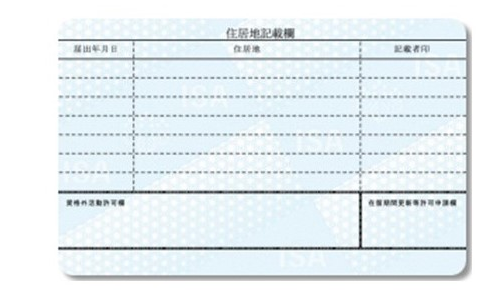
This is the "permission for activity outside your status" field on the back of the residence card. It matters when you do work (such as a part-time job) outside the activities your residence status allows. Doing so without permission can cause problems.
Source: Immigration Services Agency of Japan: "What Is a Residence Card?"
Always Check Before You Work
Having a Residence Card does not mean "you can do any job."
When starting a new job or changing jobs, check your own residence status, restriction on employment, and the content of the work.
If it is difficult to judge, consult a Regional Immigration Services Bureau or the Immigration Information Center, among others.
When Your Address Changes
If you move, you must complete the procedure at the municipality (shikuchoson) of your new address within 14 days of the day you moved to the new address.
If you submit a notification of moving in or a notification of change of address together with your Residence Card, this is also treated as having simultaneously completed the notification of change of residence under the Immigration Control Act.
If You Lose Your Residence Card
If you lose your Residence Card due to loss or theft, you must apply for reissuance within 14 days of the day you learned it was lost.
First report the loss or theft to the police, and then complete the reissuance procedure at a Regional Immigration Services Bureau.
If you learn it was lost while overseas, the procedure is required within 14 days of the day you re-enter Japan.
If Your Residence Card Is Damaged or Unreadable
If your card becomes heavily soiled or damaged so that its content can no longer be confirmed, a reissuance procedure is also available.
Do not leave it as is — check with a Regional Immigration Services Bureau.
When Your Period of Stay Is Approaching Its End
Before the deadline passes, complete an application for extension of period of stay or similar procedures as needed.
Common Misunderstandings
If I Have a Residence Card, Can I Do Any Job?
No. In some cases, the type of work you may do is determined by your residence status.
Do I Need to Go to Immigration When I Move?
Usually, if you submit a notification of moving in or notification of change of address, together with your Residence Card, at the municipality of your new address, the notification of change of residence is also completed together.
Are the My Number Card and the Residence Card the Same?
Until June 13, 2026, the Residence Card and the My Number Card were separate cards.
From June 14, 2026, through certain procedures, it also became possible to hold a "specific residence card" that has both functions.
※Not everyone automatically becomes eligible for a specific residence card.
When You Want to Consult About Your Residence Status
For general residence procedures, you can consult the Immigration Information Center, among others.
If you want to check the details of your own residence status, consult a Regional Immigration Services Bureau.
When an individual expert judgment is needed, consult an expert or consultation body such as a gyoseishoshi (administrative scrivener).
What You Can Check Next
- Renewing your period of stay
- Looking for work in Japan
- Leaving a job or changing jobs
- Moving
- Not sure where to consult
Main Sources to Check
- Immigration Services Agency of Japan
- Immigration Information Center
- Regional Immigration Services Bureau
Last checked: August 2026