Japan's Disasters and the Basics of Disaster Preparedness
In Japan, various disasters occur, such as earthquakes, typhoons, heavy rain, floods, landslides, tsunamis, heavy snow, and volcanic eruptions.
In Japan, various disasters occur, such as earthquakes, typhoons, heavy rain, floods, landslides, tsunamis, heavy snow, and volcanic eruptions.
It is important to check what disaster risks exist in the area where you live before a disaster happens.
Do not wait for Alert Level 5
Hazard maps
Your municipality's hazard map lets you check:
- Floods
- Landslides
- Tsunamis
- Storm surges
and other dangerous locations, as well as evacuation destinations.
The safe evacuation destination can differ depending on the type of disaster.
"Evacuation site" (hinanbasho) and "evacuation shelter" (hinanjo)
Depending on the local government, these have different roles:
- Evacuation site (hinanbasho): a place to temporarily flee to protect your life from a disaster
- Evacuation shelter (hinanjo): a place where people who cannot live at home stay for a certain period
Check this in advance, during normal times.
Disaster weather information starting May 2026
From May 2026, disaster weather information for heavy rain, river flooding, landslides, storm surges, and similar has been revised to correspond to a 5-level alert scale.
The important point is not to wait for Alert Level 5.
If you are in a dangerous location, evacuate by Level 4.
At Level 3, people who need more time to evacuate — such as older adults, people with disabilities, and households with young children — should begin evacuating.
"Evacuation Site" and "Evacuation Shelter"
Depending on the local government, the roles differ as follows. The safe evacuation destination can differ depending on the type of disaster.
Evacuation site (hinanbasho)
- A place to temporarily flee to protect your life from a disaster
Evacuation shelter (hinanjo)
- A place where people who cannot live at home stay for a certain period
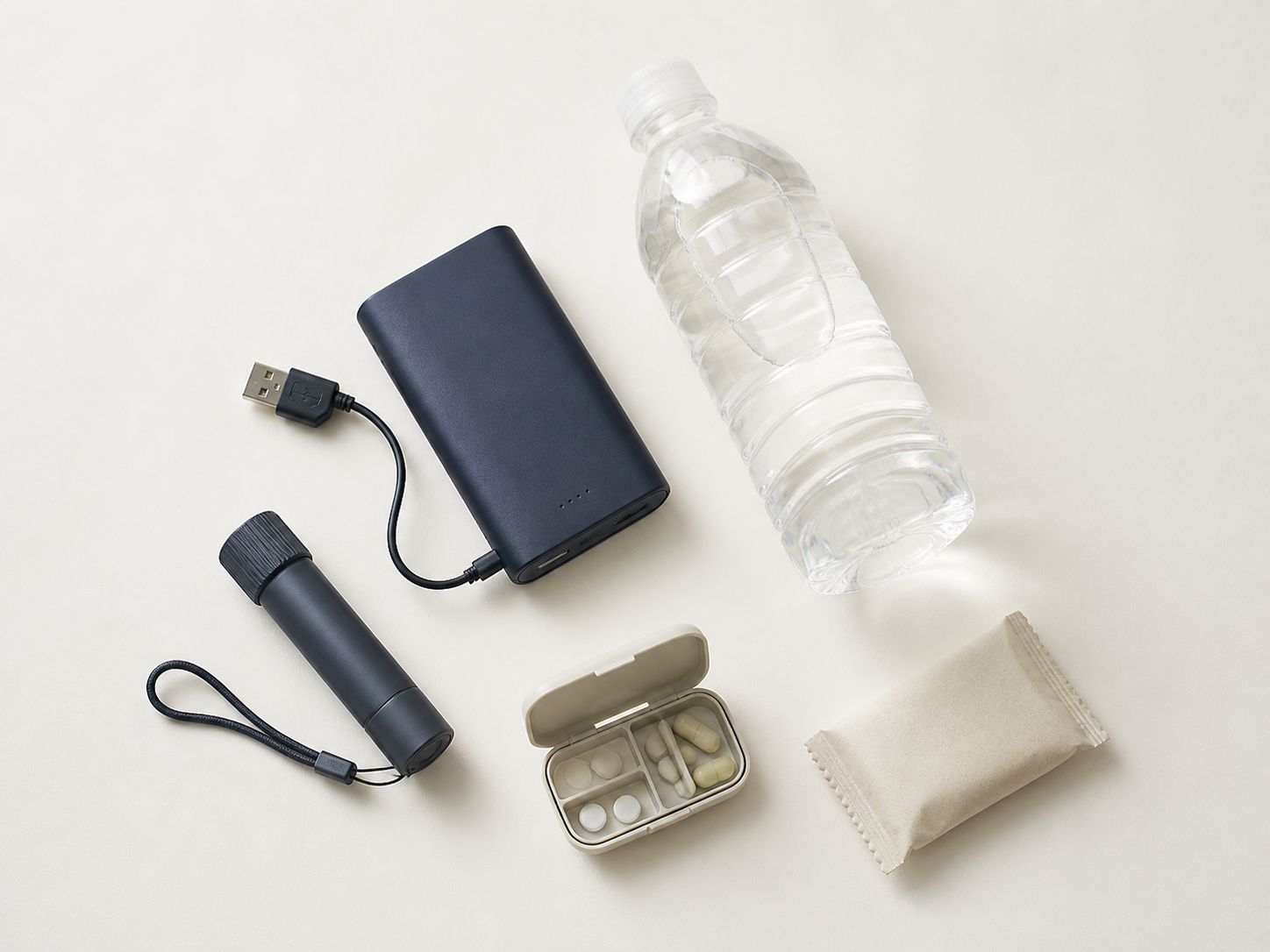
Preparing at home
Depending on your family's situation, prepare things such as:
- Drinking water
- Food
- Regular medication
- A mobile battery
- A flashlight
- Cash
- Information on important documents such as your Residence Card (zairyu card)
- Baby supplies
- Menstrual products
and similar items.
Deciding things as a family in advance
During a disaster, phones and the internet can become difficult to use.
Decide in advance:
- Where to evacuate
- How to contact your family
- Who will pick up your children
- How to meet up if family members are in different places
and similar things.
Disaster information in foreign languages
There are services, such as those from your municipality and Safety tips, that let you check disaster information in a foreign language.
It is reassuring to register and check these during normal times.
What you can check next
- An Earthquake Has Happened
- Typhoons, Heavy Rain, Floods, and Landslides
- Tsunami and Evacuation Shelters
- Viewing Disaster Information in a Foreign Language
- Calling 119, Fires, and Emergency Phone Numbers
Main places to check
- Your municipality
- Japan Meteorological Agency
- Fire and Disaster Management Agency
- Cabinet Office / Government Public Relations