Typhoons, Heavy Rain, Floods, and Landslides
Typhoons and heavy rain can cause floods, inundation, landslides, storm surges, and other hazards.
Typhoons and heavy rain can cause floods, inundation, landslides, storm surges, and other hazards.
Check information early, not after danger is already close.
Do not wait for Level 5.
Disaster Weather Information Changed From May 2026
From May 29, 2026, disaster weather information for river flooding, heavy rain, landslides, and storm surges has been issued in a form that corresponds to a 5-level Alert Level (警戒レベル) system.
People in dangerous locations should evacuate by Alert Level 4.
At Level 3, people who need more time to evacuate — such as elderly people, people with disabilities, and households with small children — should begin evacuating.
Do not wait for Level 5.
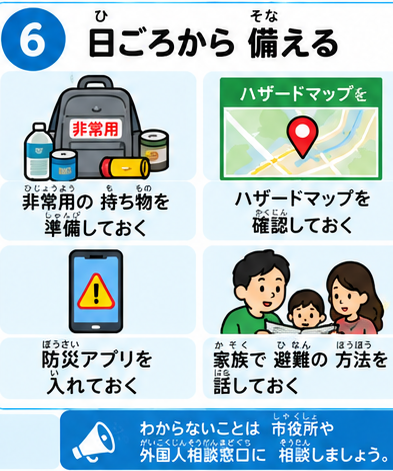
Check the Hazard Map
Check your municipality's (shikuchoson) hazard map to see whether your home, workplace, school, etc. are in a danger zone for:
- Flooding
- Inland water flooding
- Landslides
- Storm surges
When Going Outside Is More Dangerous
However, evacuating before danger increases is the basic principle.
Check information early, not after danger is already close.When Going Outside Is More Dangerous
In such cases, consider protecting yourself in a safer location, such as an upper floor of a building or a room away from a cliff.However, evacuating before danger increases is the basic principle.
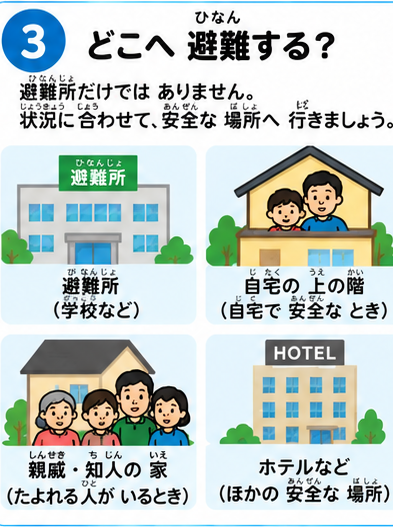
Evacuation Information
Evacuation instructions and similar notices are issued by your municipality.
Check your municipality's evacuation information, not only information from the Japan Meteorological Agency.
When Going Outside Is More Dangerous
There are cases where moving is more dangerous — for example, when roads are already flooded, or when it is already raining heavily or very windy outside.
In such cases, consider protecting yourself in a safer location, such as an upper floor of a building or a room away from a cliff.
However, evacuating before danger increases is the basic principle.
Do Not Go Near Rivers or Cliffs
Do not go to look at swollen rivers, irrigation channels, coastlines, cliffs, and similar places.
What You Can Check Next
- The basics of disasters and disaster preparedness in Japan
- Tsunamis and evacuation shelters
- Viewing disaster information in foreign languages
Main Sources to Check
- Japan Meteorological Agency
- Municipal government (shikuchoson)
- Ministry of Land, Infrastructure, Transport and Tourism
Last checked: August 2026